Why Loft
Modern by Design. Flexible by Rule.
Loft combines modern architecture, configurable business logic, open APIs, and standard database technology so retailers can adapt the system to their business without maintaining a separate software version or being locked into outdated technology.

Leave the Legacy Infrastructure Behind
The infrastructure behind legacy retail systems was not designed for the way retailers manage IT today. It can be specialized, inflexible, and costly to maintain, with added complexity around backups, virtualization, and long-term support.
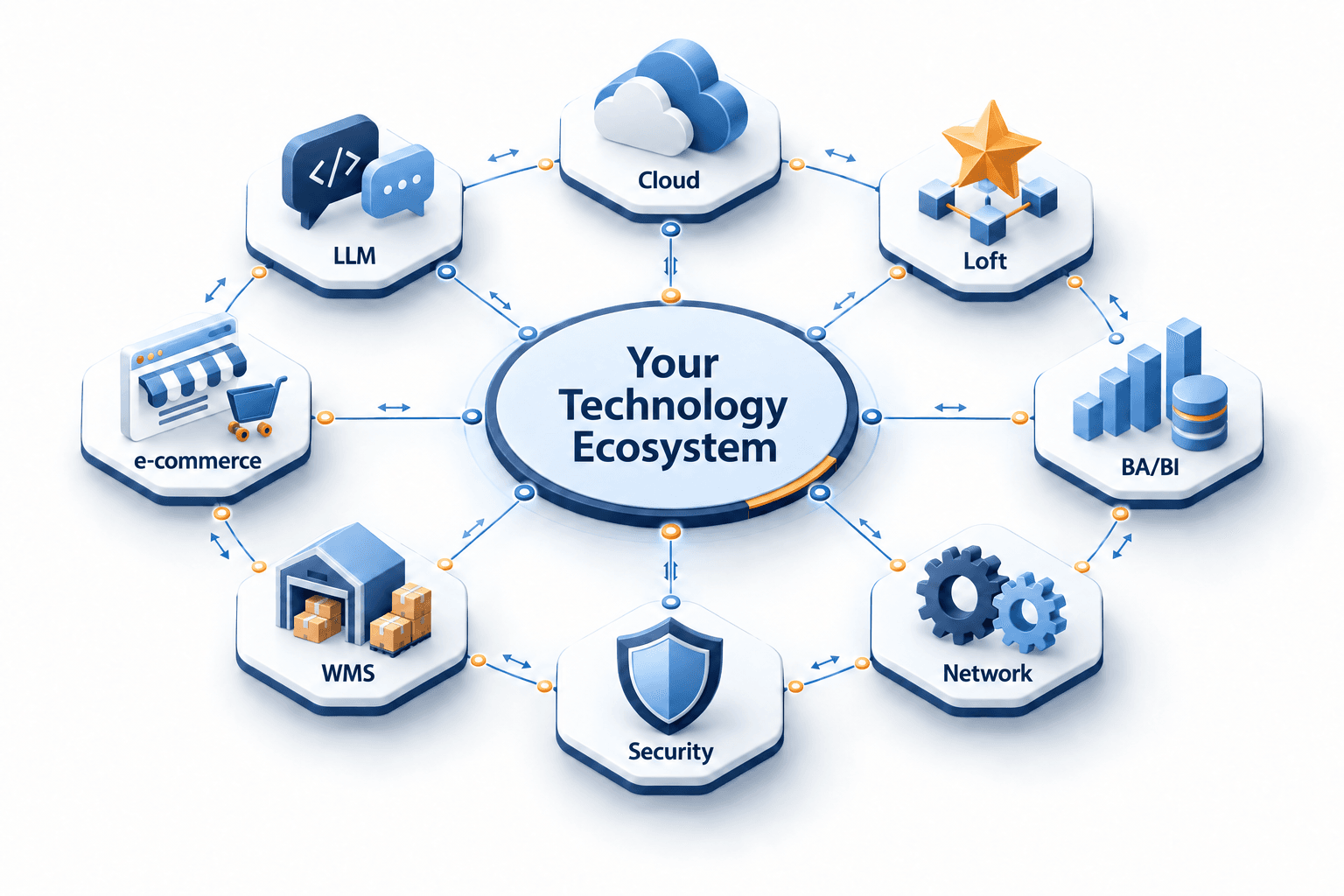
Loft runs on standard infrastructure, including a modern application server, relational database, and browser-based interface that does not require specialized client software on every machine. It can be deployed on-premises or hosted and fits within the same IT management practices used across the rest of your environment.
For retailers transitioning from a legacy platform, Loft can be introduced without carrying outdated infrastructure forward. The result is a cleaner, more flexible environment that is easier to support over time.
A Modern Interface Is Only Part of the Story
Some legacy retail systems have added newer interfaces without rebuilding the workflows and architecture underneath. The result may look modern, but the underlying system can still operate around processes designed for a very different era of computing.
Loft was built from the ground up for how teams work today, with browser-based access, touchscreen support, and workflows designed for modern retail operations.
Define It Once. Apply It Everywhere.
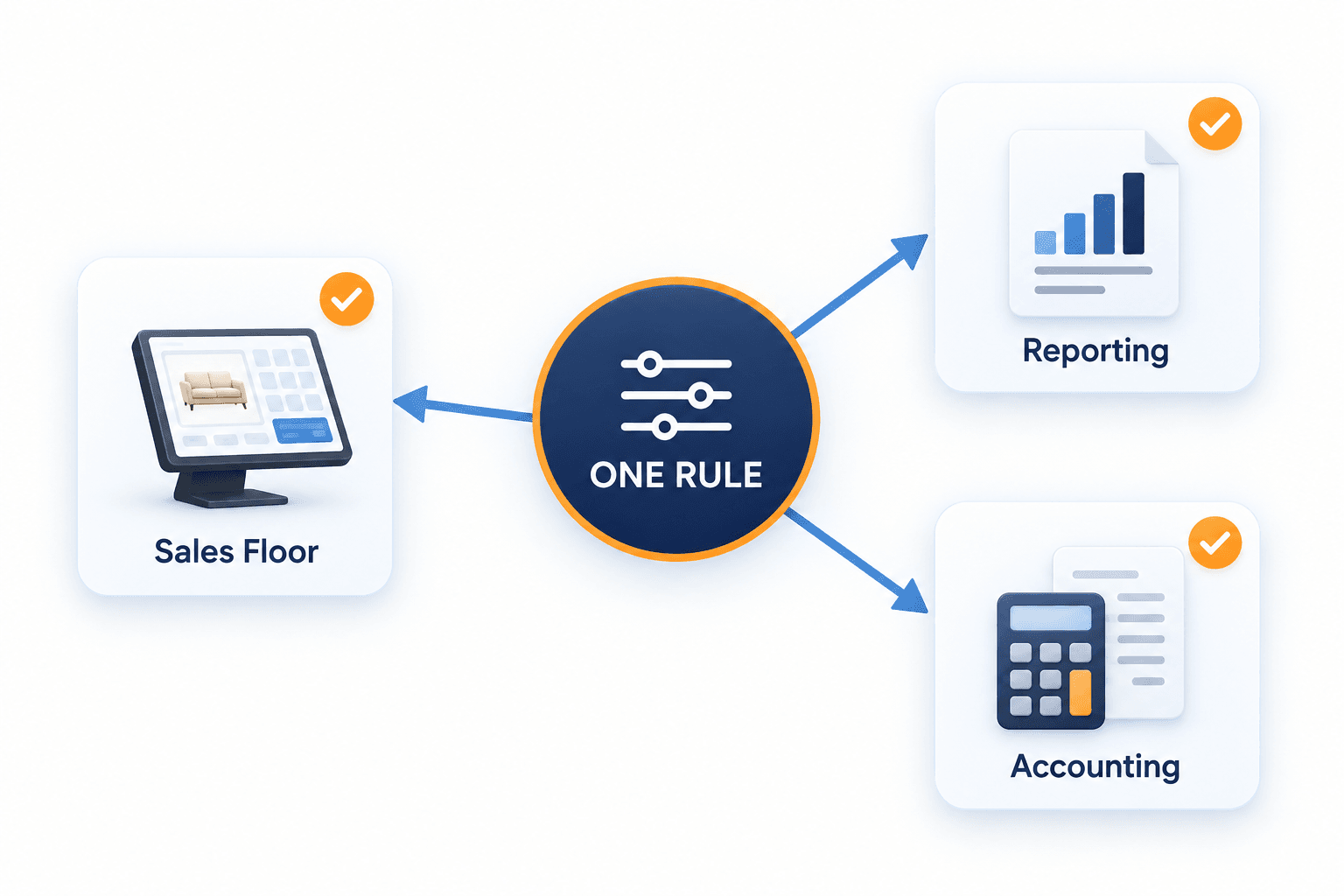
In many legacy systems, the same business rule may be defined in multiple places — once for how a sale is entered, once for how it is reported, and once again for how it is processed later. When a rule needs to change, someone updates it in one place and the other one gets missed. That's how a business ends up with two reports that are both "right" yet don't agree with each other — and nobody can say why.
Loft defines each rule once and applies it everywhere it belongs. When a rule changes, the update carries across the system, helping keep what the sales floor sees, what reports show, and what accounting reflects aligned.
Your Data Stays Your Data
Some legacy systems store data in a format that ordinary business tools can't read directly. They offer what looks like SQL reporting, but behind the scenes, a separate copy of your data is being maintained so standard reporting tools can connect to it. It works — but you're looking at a copy, not the system of record itself.
Loft's database is a standard relational database from day one — Oracle or PostgreSQL. It's your actual data, queryable directly by the tools your company already owns. Nothing sits between you and what's really happening in your business. You own your data.
Clean Data Isn't an Accident
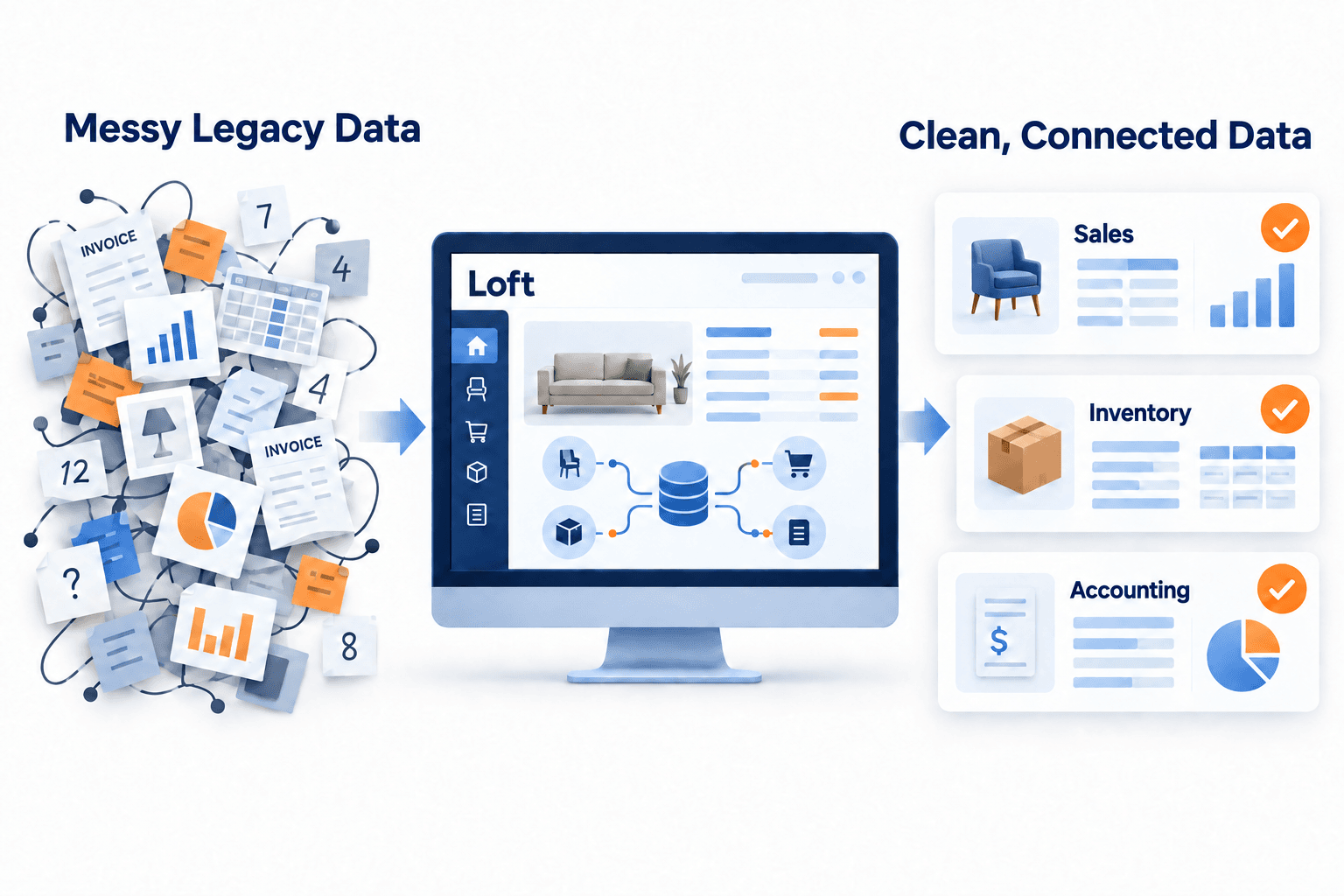
Systems that have been patched and extended for twenty-plus years tend to accumulate bad data over time because the software was never built to stop it from happening in the first place. "Fixing the data" becomes a routine chore instead of an exception.
Loft's database and application are built together, so the rules that keep your data clean are enforced by the system itself — not maintained by hoping everyone follows the process correctly.
You Choose Your Database. Not the Other Way Around.
Being locked into one database vendor's licensing terms — for a system you may run for another twenty years — is a cost that compounds quietly in the background of every renewal. Loft runs on Oracle or PostgreSQL, so that decision belongs to you, not to a choice someone made decades ago that you've been paying for ever since.
Built the Way Modern IT Already Works
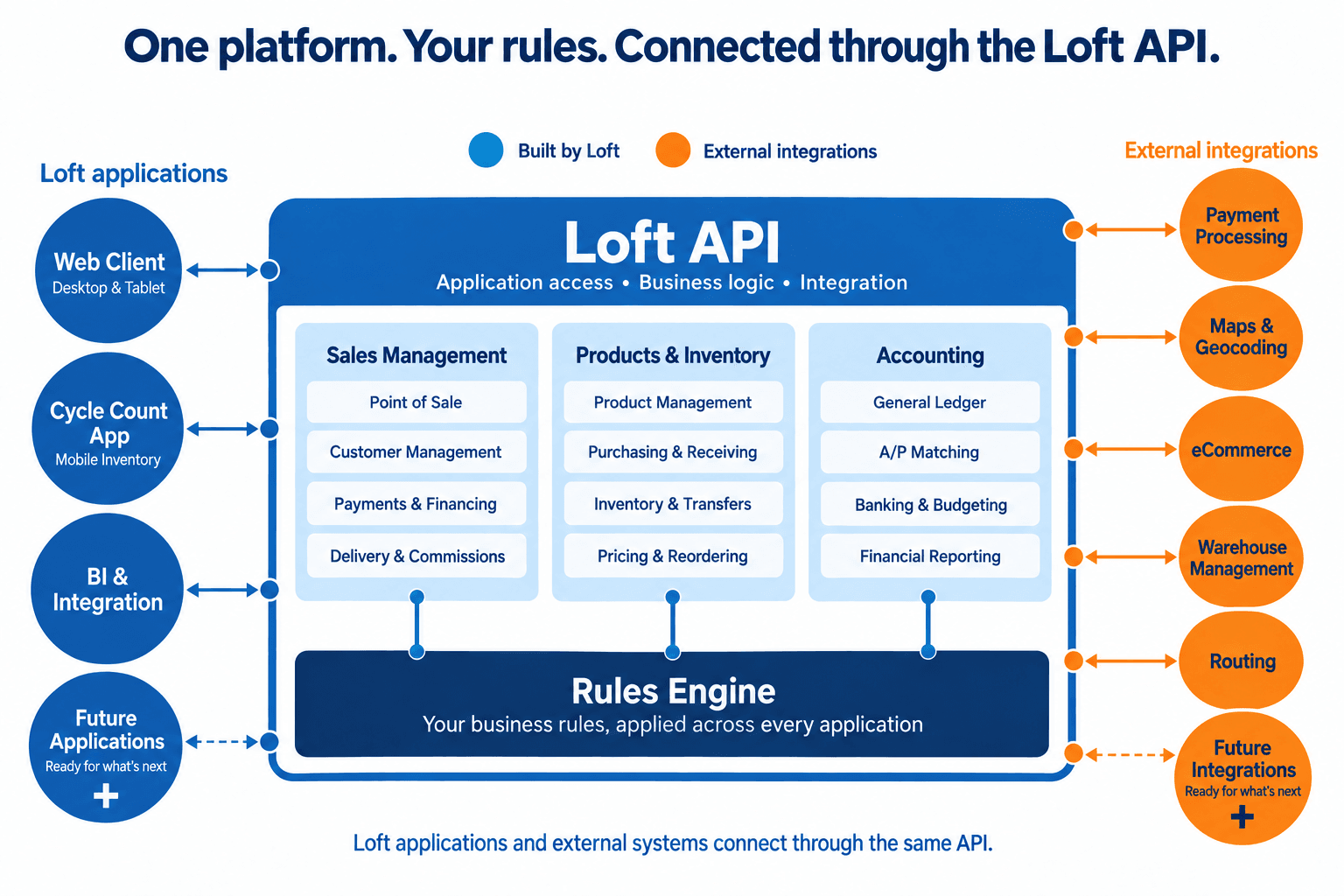
Loft is modern software designed to scale, back up, and virtualize using the same practices your IT team already relies on. A documented API makes it easier to connect other systems without turning every new integration into a custom development project.
The result is a platform your IT team can manage like the rest of your environment, not a special case with its own infrastructure and support requirements.